Switching to battery power sparks a quiet revolution
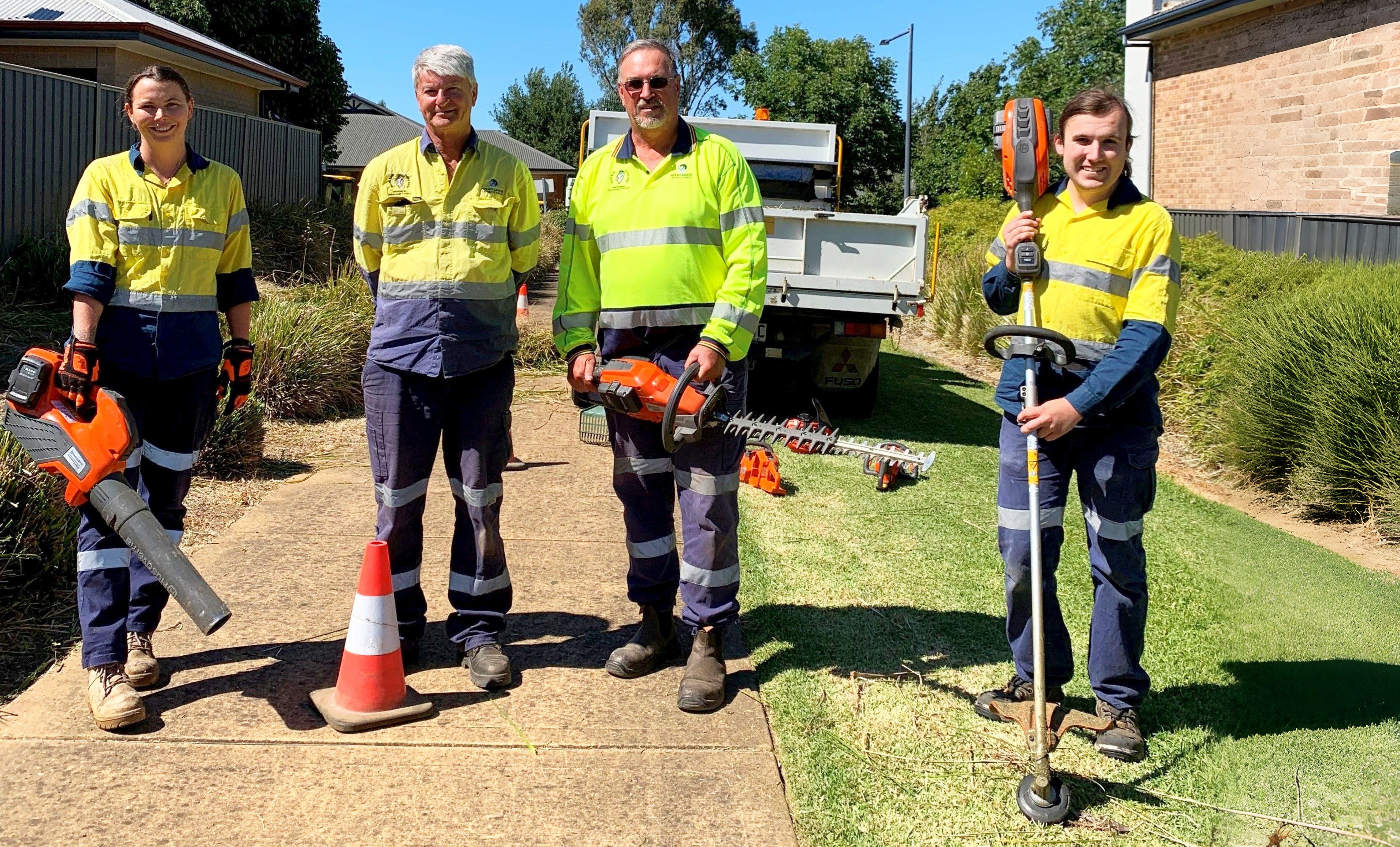
Over the past five months, the Mount Barker District Council has transitioned about 95 per cent of the small maintenance equipment used by its horticulture, arborist and rapid response teams from petrol-powered engines to battery power.
The shift to electric chainsaws, hedge trimmers, blowers, whipper snippers and pole saws is making public maintenance less intrusive, more environmentally friendly and safer for team members.
The council’s Manager of Operations, Jamie Thornton, said the change was driven by the staff who use the equipment on a daily basis.
“We began exploring alternatives to petrol-powered equipment about 18 months ago as part of our efforts to improve safety and working conditions,” he said.
“We asked our workforce to trial battery-powered equipment from four different brands and provide feedback on their performance in the field.
“During the trial, the performance of each piece of equipment was assessed along with other factors such as battery life and product cost. The combined data was used to choose the equipment that best suited the team’s needs.”
About 80 battery-powered items have been purchased to date through equipment replacement budgets, with previous petrol-powered equipment being kept as a back-up.
“A small amount of the petrol-powered equipment is still in use as some of it is more powerful or performs better than the electric alternative. Overall, about 95 per cent of our equipment is now battery-powered,” Mr Thornton said.
“The switch to battery power has many benefits – there are no fuel or exhaust fumes, the equipment is lighter to carry and use, it’s less noisy and teams don’t have fuel management issues when they’re out on a job.”
The success of the change to battery-powered small maintenance equipment has seen the council consider switching some of its larger equipment to electric.
“We’re keeping our eyes on electric technologies that are emerging and whether they might be a good fit for our work in the future,” Mr Thornton said.
“We’ve tested a couple of electric mowers and had some really good feedback. These, along with electric or hybrid vehicles, could be options for us when our other plant and equipment comes to the end of its useful life and needs replacing.”
The transition to battery-powered equipment aligns with the council’s Corporate Energy and Emissions Reduction Plan (CEERP), which aims to reduce corporate greenhouse gas emissions and energy use.
Phil Burton, the council’s General Manager Infrastructure, emphasised the importance of these efforts in creating a sustainable future.
“We’re also investigating the long-term feasibility of installing solar panels, which would further increase the environmental sustainability of recharging our equipment’s batteries,” Mr Burton said.
“With the support of the CEERP and future strategies, Council is demonstrating its leadership and commitment to achieving net zero emissions by 2050.”