Won’t repeat it. Won’t fix it: 11 lessons from Mount Barker
In 2010, the State Government rezoned around 1,300 hectares of land to support housing supply.
What did not arrive with that rezoning was a clear, enforceable, whole of government plan for how infrastructure, services and jobs would be delivered. Instead, what followed was closer to a free market experiment.
Today, that experiment is being managed across more than 20 active developers, over 100 development stages, more than 40 infrastructure deeds and three separate rates. The system is complex, fragmented and difficult to coordinate because it was never designed to operate as a single, staged program.
Fifteen years on, the results are visible in roads that do not connect, infrastructure that arrives late and at higher cost, missing community facilities, and a town that sends too many people out onto the freeway every morning for work.
Mount Barker’s experience offers some very clear lessons.
1. There was no plan
Despite the scale of growth, there has never been a single, public, integrated plan showing how transport, utilities, schools, recreation and services would be staged, funded and delivered. Growth was approved first. The plan never really followed.
2. The rezoning was treated like a free market experiment
Instead of a tightly controlled, staged growth program, development was largely left to market forces. The outcome was predictable. Housing arrived faster than infrastructure, services and jobs.
3. The State’s deed commitment to deliver an essential connector road has failed
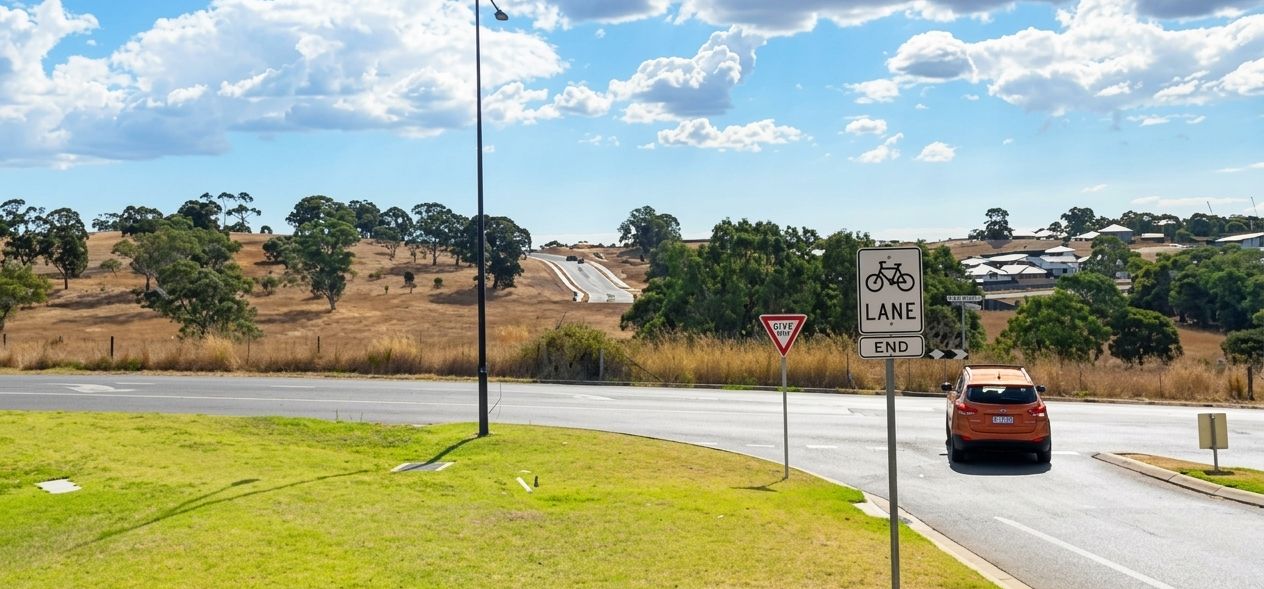
A key piece of infrastructure promised under the growth framework, Heysen Boulevard, has not been delivered as intended. The result is a road network that does not function the way it was meant to, with real impacts on congestion and safety.
4. Essential community services were not properly set aside
Land for schools, recreation and community facilities was not secured early enough or at sufficient scale. The community has been left playing catch up, trying to retrofit space for services that should have been planned from the start.
5. The State did not secure fair and reasonable obligations from developers
The planning settings did not lock in strong enough infrastructure and land contributions. In practical terms, the public sector gave away too much and is now paying the price through higher costs and harder fixes.
6. The State has not properly corrected its mistakes
Rather than resetting the framework, responses have largely been incremental and reactive. The underlying problems in how the area was planned and sequenced remain.
7. The planning system did not listen to the community
Warnings were raised from the start about the scale and uncertainty of the growth being proposed. In 2010, at a packed community meeting, Lindsay Campbell, then a Council Member, said, “One of the great inconsistencies is that in actual fact this plan could mean anything from an outcome of 33,000 people living in Mount Barker to 75,000 people living in Mount Barker.” He was right. The growth was approved without clear limits, clear staging or clear infrastructure commitments, and fifteen years later the district is still trying to catch up.
8. Retrospective fixes are band aids, not a plan
Much of what has followed has been about patching problems after they appear. That is not strategic planning. It is damage control, and it is always more expensive.
9. There was no proper staging and weak planning controls
Growth was not tightly staged. Controls like minimum lot sizes and coordinated release sequencing were insufficient. The result is fragmented development and costly retrofitting of infrastructure.
10. No early planning for schools and recreation means more expensive outcomes
When land is not set aside early, solutions become more complex and more expensive. Those costs ultimately show up in infrastructure budgets and in housing prices.
11. The employment lands plan has failed
Too few jobs have been created locally. The result is more people commuting out of Mount Barker, more pressure on the freeway, and a town that functions more like a dormitory suburb than a complete community.
What this means now
South Australia is again relying on growth areas to deliver housing. The State is clear that it does not want to repeat the Mount Barker experience.
But Mount Barker is not a historical case study. It is still growing, and the consequences of how it was planned and delivered are still being managed.
Mount Barker shows what happens when growth runs ahead of planning, infrastructure and jobs. It becomes more expensive, less efficient and far harder to fix later. That is not a theory. It is what has happened here.
If the next generation of growth areas is to perform better, the lesson is simple. Plan first. Stage properly. Lock in fair obligations. Secure land for schools, recreation and services. Deliver infrastructure alongside development, not years later.
Learning the lesson somewhere else is not enough. Fixing the consequences in Mount Barker is the real test.
Council’s advocacy priorities
Mount Barker District Council’s Advocacy Plan focuses on six priorities that respond directly to these lessons:
- Wastewater infrastructure, including 48 million dollars in State Government co investment towards the more than $100m upgrade of the Laratinga Water Recovery Plant and associated trunk sewer infrastructure.
- Road infrastructure, including completion of Heysen Boulevard.
- Public transport, improving services to the Adelaide CBD and strengthening intratown connections, including Keoride expansion.
- Sport and community infrastructure to support population growth and access to recreation and community facilities.
- Health and education infrastructure, including schools and health services required to meet population demand.
- Policy and funding reform to support consistent, sustainable and equitable approaches to growth area planning and infrastructure funding.
Mount Barker District Council CEO Andrew Stuart said the district’s experience should not be treated as a historical case study.
“This was never a surprise. The risks were obvious from the start,” he said. “Mount Barker is still growing, but too often it feels like the State has moved on, treating this as a lesson for the future instead of a responsibility in the present.”
“If the State is serious about doing growth better, it should start by fixing the consequences of how Mount Barker was planned and delivered, not just promising not to do it again somewhere else.”
Authorised by R. Voogt, Mount Barker District Council, 6 Dutton Road, Mount Barker, SA, 5251