Investing in wellbeing, environment and economic development

The draft Council plan proposes a 5.3 percent rate increase, with $43.4 million of the planned $151.3 million expenditure to be raised from general rates in the 2024/25 financial year.
In commending the draft plans and budgets for consideration by the elected body, Chief Executive Officer Mr Andrew Stuart stated, “The draft annual business plan and budget for the next financial year demonstrates sound financial management principles aligned to our Long Term Financial Plan.”
Mr. Stuart highlighted the inclusion of a rate strategy designed to ease the impact on ratepayers over a three-year period due to forecasted significant increases in council costs reflected by the Consumer Price Index (CPI). This strategy began in the 2023/24 financial year with a 5.6 percent general rate increase, which was 2.3 percent below the March Adelaide CPI rate of 7.9 percent. For 2024/25, the general rate increase is set at 5.3 percent, which is 1 percent higher than the March 2024 Adelaide CPI rate of 4.3 percent. The final year of this strategy, 2025/26, will see a general rate increase of 1.3 percent greater than the March 2025 Adelaide CPI rate.
The draft plan also incorporates feedback from a 2023 Community Scorecard exercise, which collected over 1,500 responses regarding service delivery, livability, district amenity, and general wellbeing. The top community priorities identified were roads, traffic, and responsible growth and development.
Projects in the draft Annual Business Plan addressing these community priorities include upgrades to Bollen, Paech, and Hartmann Roads, as well as working with the Department for Infrastructure and Transport (DIT) to advocate for upgrades for main arterial roads in the district.
Mayor David Leach emphasised the significance of the draft plan, stating, “The draft plan outlines a $151.3 million spend, including $48.4 million for upgrading and building new assets such as roads, footpaths, stormwater drainage, street trees, sporting facilities, and open space.” He added that Council receives around $20 million of new assets from development each year and it is the council’s intent to maintain existing service levels across its asset base while responding to growth demand.
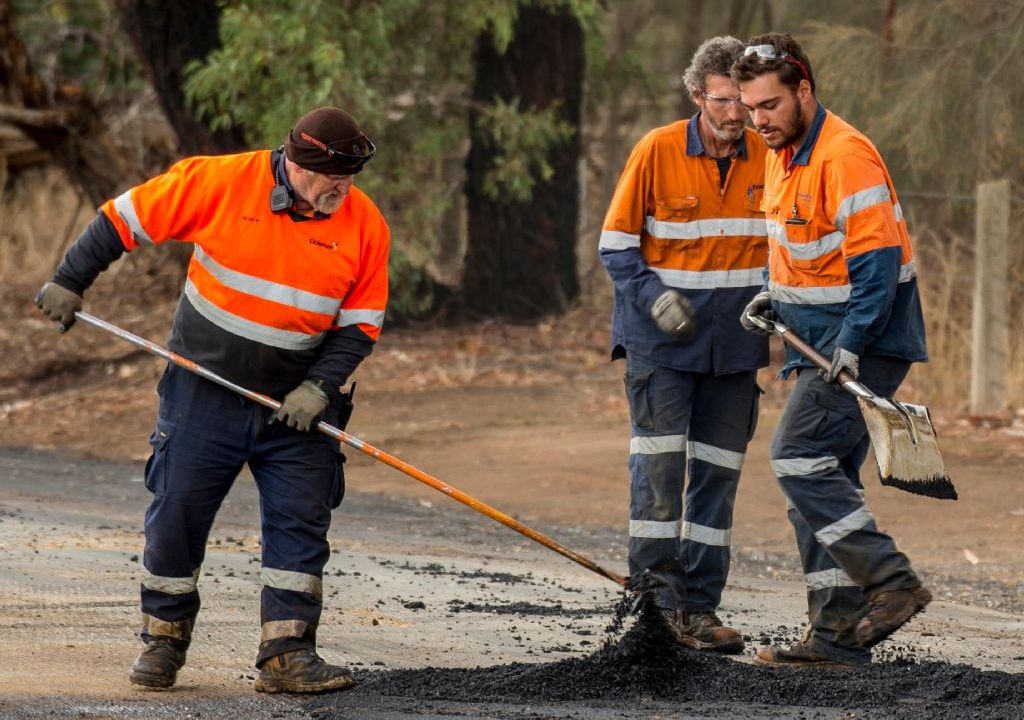
The council also plans to allocate $55.5 million for existing services like waste management, library services, development assessment and planning, community development, immunisation and public health, community transport, and wastewater services. An additional $33.3 million is proposed for major wastewater and recycled water improvements.
“As the fastest-growing municipality in South Australia, we have carefully noted the challenges ahead and recognise past experiences and resident feedback that shape how we will improve our infrastructure and service delivery,” Mayor Leach said.
“Our Annual Business Plans are closely aligned with our Community Plan and have a strong focus on improving wellbeing, the environment, and economic development. To this end, some of the initiatives in this financial year’s plan are providing further support for local sporting clubs, increasing cleaning of public conveniences, and expanding our tree planting program.”
The council reviews its Long Term Financial Plans annually and in its most recent iteration, covering 2024 to 2034, an increase in the kerbside waste charge by approximately $1 per week for a three-bin service was included. The increased charge is a result of rising costs, including an increase in the EPA levy for waste disposal to landfill, the ban on recycled material being imported into China, along with escalations in contractor kerbside waste collection costs.
The Long Term Financial Plan also projects significant investment in strategic infrastructure projects, with forecasted debt reaching $160 million by 2027/28, primarily for wastewater infrastructure and municipal assets. $97 million of this debt is for critical wastewater infrastructure that will be paid for by Wastewater Services customers through annual service charges or by developers through infrastructure fees. Ratepayers who are not Wastewater Services customers do not contribute towards the Wastewater Service.
A further $64 million of this debt is for municipal assets, including the Regional Aquatic and Leisure Centre, a variety of transport projects, and other community assets. These assets are funded through a combination of grants, rent income, user charges, developer contributions, and general rates.
Mayor Leach noted the council’s ongoing efforts to secure funding from Federal and State Governments to minimise the financial burden on ratepayers. He cited the Regional Aquatic and Leisure Centre, bushfire recovery and resilience programs, and road resurfacing programs as beneficiaries of such funding.