Mount Barker Council calls for action to support SA’s housing agenda
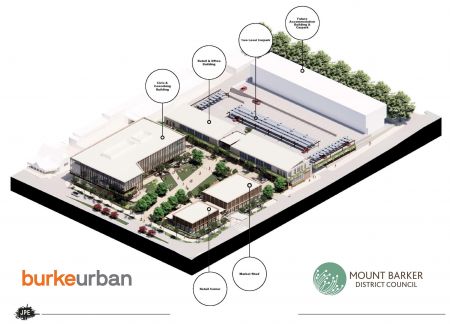
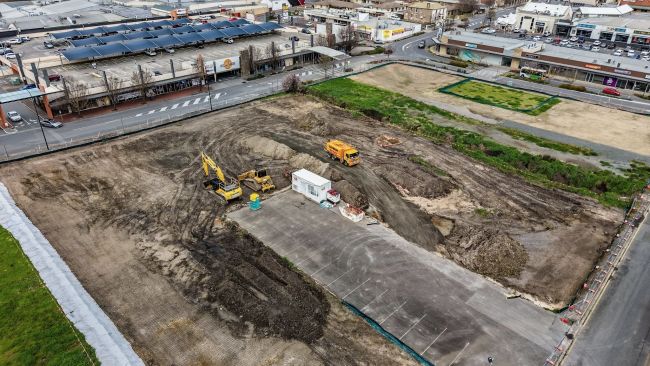
The council’s debt is forecast to reach $61 million by 30 June 2025, comprising $47 million for council projects and $14 million for wastewater infrastructure. Peak combined debt of $255 million is anticipated in 2027/28, including $168 million through the council’s newly created wastewater subsidiary, GMB Water, and $87 million for council-led infrastructure projects including the City Centre and Summit Precinct.
Council CEO Andrew Stuart said the level of borrowing reflects strategic, long-term planning to deliver essential infrastructure aligned with population growth.
“These are multi-decade investments vital to unlocking the housing and infrastructure South Australia urgently needs. We are delivering responsibly,” Mr Stuart said.
“We are using debt wisely to deliver intergenerational infrastructure that provides services and enables housing, jobs and economic development.
“Mount Barker is leading the way in supporting state and national housing agendas, but we cannot continue to shoulder this alone.”
In preparation for sustained growth, the council has established a wholly owned Section 42 subsidiary—GMB Water—to manage wastewater operations. GMB Water will officially assume operational responsibility from 1 July 2025.
The new entity – established with the approval of the Minister for Local Government – is governed by an independent, skills-based board, with expertise spanning utility operations, finance, governance, legal and risk. An independent Audit and Risk Management Committee is also being appointed, supported by external advisors as needed.
GMB Water was formed following external advice provided by Frontier Economics (2021) and BRM Advisory (2022), with the subsidiary charter drafted by Norman Waterhouse. Following Council endorsement, the charter was referred to the Minister for Local Government in October 2024 and gazetted on 2 January 2025.
The transition of services will be phased, with some administrative establishment activities continuing into late 2025. External expertise has been sought for legal, branding, and technical matters, but the majority of work has been delivered in-house.
“Council has structured GMB Water to be future-ready, financially sound, and accountable to the community it serves,” Mr Stuart said.
Council’s draft Long Term Financial Plan 2025–2035 shows GMB Water is forecast to return an operating surplus by 2034/35. However, due to South Australian accounting standards, infrastructure fee income—tied to developer contributions—is excluded from these calculations.
When this key growth-related revenue is included, the subsidiary is forecast to record only one year of deficit (2027/28) across the ten-year planning period.
Similarly, Council’s headline forecast of a $6.17 million deficit in 2028/29 does not include developer contributions. When these are factored in, the result becomes a $3.3 million surplus.
The 2028/29 result reflects the first full year of operation for several major projects including the upgraded Laratinga Water Recovery Plant, City Centre, trunk sewer infrastructure, and the Summit Aquatic and Leisure Centre with associated depreciation, operating and finance costs.
“Developer contributions are key to funding growth and repaying debt,” Mr Stuart said.
“When growth occurs, infrastructure pays for itself. If growth slows, we re-phase our projects. This is scalable, sustainable investment.”
“We’ve taken the long-term view. Our infrastructure investments are phased, our financial oversight is strong, and we are seeking independent advice to ensure future sustainability,” he said.
In January 2025, the council adopted a new advocacy plan to secure funding and influence policy changes that reflect the needs of the Mount Barker community. Developed in response to community feedback and insights from the MARKYT Scorecard, the plan outlines six key priority areas: investment in wastewater infrastructure, improved public transport, essential road upgrades, enhanced community and recreation facilities, better access to education and health services, and policy reforms to support high-growth councils.
Key advocacy requests include $48 million for wastewater projects, including the Laratinga Water Recovery Plant and trunk sewers, and ongoing investment in public transport, education, and road upgrades.
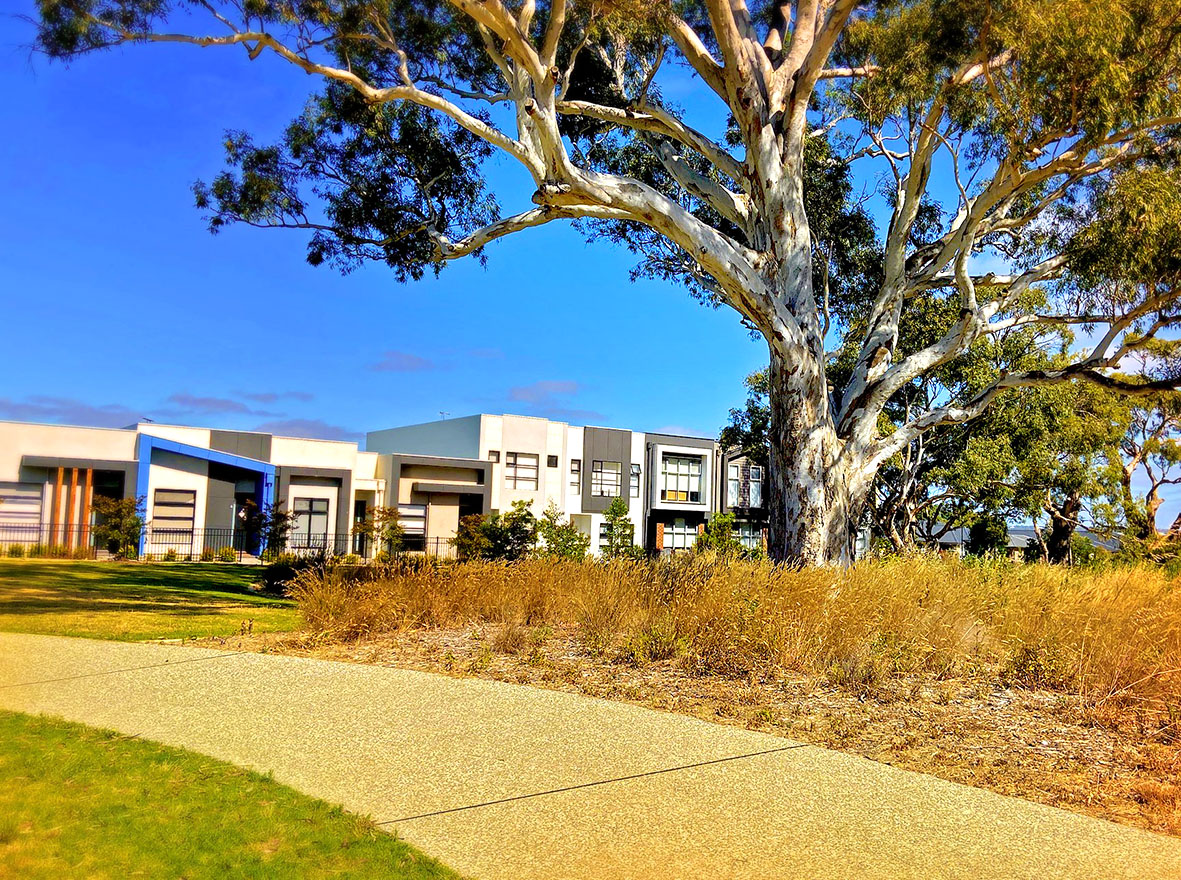
Mount Barker continues to deliver housing growth at unmatched scale in South Australia, but with a level of debt per property up to five times higher than other growth councils where the state government is co-investing in infrastructure.
“The State government has put $1.5 billion into water infrastructure in metropolitan Adelaide. We’re asking for funding of less than 4 percent of that amount from the State and Federal Governments to enable the delivery of 14,000 new homes,” Mr Stuart said.
“We’re investing in infrastructure that supports the state and federal housing agenda. But Council cannot continue to act as the State’s delivery agent without the same respect, recognition and funding support other growth councils receive.
“Grants or interest-free loans would allow us to deliver growth in a more orderly, equitable way and reduce the burden on local ratepayers.
“We’re doing our part. Now we need the other levels of government to do theirs.
“It’s time for the State Government to stop saying sorry and start saying yes.”